I watched a kid who never finishes anything play Star Grazer for 40 minutes straight.
No bathroom breaks. No “I’m done” excuses. Just pure focus.
Here’s what makes this Blooket game mode different from everything else.
What Actually Happens in Star Grazer
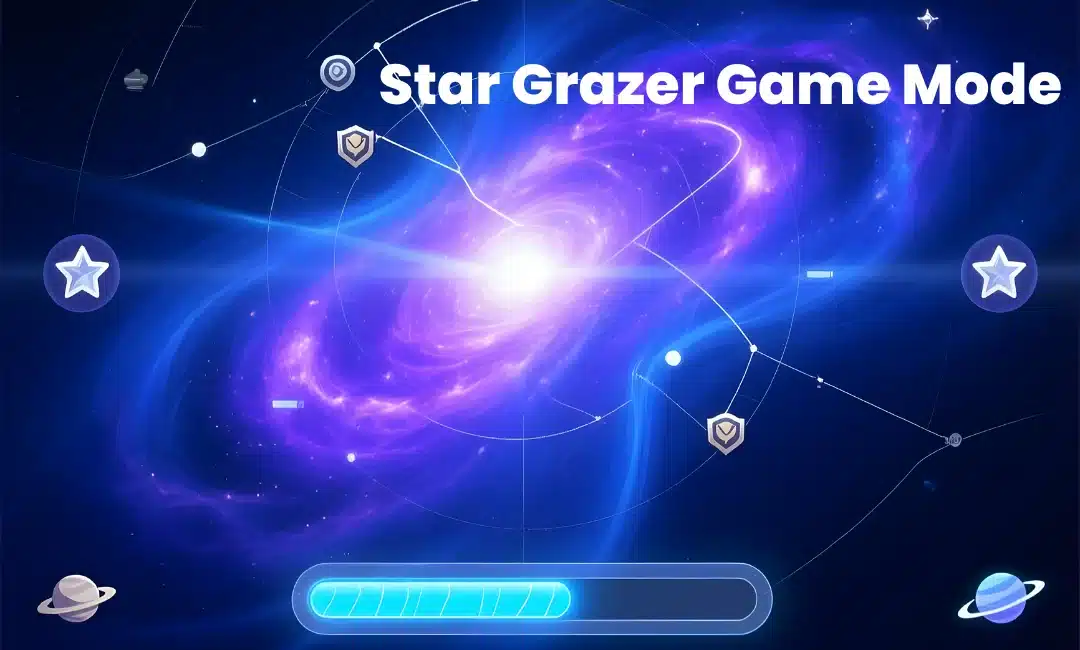
You’re a spaceship. You collect stars by answering questions.
Sounds basic, right? That’s what I thought too.
Then I saw the mechanics. Every correct answer moves you through space. Wrong answers? You hit asteroids and lose stars.
Psychology is insane.
Students aren’t just earning points. They’re protecting what they already have.
Why Loss Aversion Beats Rewards Every Time
Here’s something most teachers don’t get:
Kids will work twice as hard to avoid losing something than to gain something new.
Star Grazer exploits this perfectly.
- Correct answer = collect stars (feels good)
- Wrong answer = lose stars to asteroids (feels terrible)
- Result = students actually think before clicking
I’ve used rewards-only games. Students guess randomly and hope for the best.
With Star Grazer gameplay, they slow down. They read carefully. They check their work.
The Comeback Mechanic That Changes Everything
You know what kills engagement? Hopelessness.
When a student is losing by question 3, they mentally quit by question 5.
Star Grazer fixes this with star clusters.
Big groups of stars appear randomly. Anyone can grab them. Suddenly the kid in last place is first.
I’ve seen students who were checked out suddenly sit up straight when a cluster appears.
That’s not luck. That’s game design that understands motivation.
When to Use Star Grazer (And When Not To)
Perfect for:
- Vocabulary review
- Math fact practice
- Any content where speed + accuracy both matter
- Students who need visual feedback
- Classes where competition motivates learning
Skip it for:
- Brand new content (too much pressure)
- Students who get anxious under time pressure
- Team-building lessons (this is solo only)
I tried using it for essay writing concepts once. Disaster.
Wrong tool for the job. But for recall and repetition? Unmatched.
My Exact Setup Process
Here’s how I launch Star Grazer Blooket every time:
- Set the timer to 10-15 minutes (longer kills momentum)
- Use 15-25 questions (less gets boring, more gets exhausting)
- Mix easy and hard questions (keeps everyone engaged)
- Show the leaderboard mid-game (creates urgency)
The leaderboard move is crucial. Students see they’re close to the top and push harder.
What Students Actually Say About It
“Mr. Johnson, can we play the space game again?”
They don’t even call it by name. They just know it’s the one where they actually care about every question.
One student told me: “I like that I can still win even if I mess up early.”
That’s the comeback mechanic working exactly as designed.
Common Teacher Mistakes with Star Grazer
Mistake #1: Making the question set too long.
20 minutes feels like 2 hours in game time. Keep it tight.
Mistake #2: Using it for complex problem-solving.
This game rewards quick thinking. Not deep analysis.
Mistake #3: Never showing the leaderboard during play.
Competition drives engagement. Let them see where they stand.
Quick FAQ: Star Grazer Mode
How many questions should I include?
15-25 works best. Anything over 30 and students burn out.
Can they play in teams?
No. Star Grazer is solo only. Try Tower Defense for team play.
What happens when time runs out?
The game ends immediately. Whoever has the most stars wins.
Is there a way to remove the asteroid penalty?
Not in standard mode. The penalty is core to the game mechanics.
The Real Reason This Game Works
Most educational games feel like work disguised as play.
Star Grazer feels like play that happens to teach.
The space theme, the visual feedback, the comeback opportunities—it all adds up to genuine engagement.
I’ve taught for 8 years. I’ve tried everything.
This is one of three games that consistently keeps every student locked in from start to finish.
Use Star Grazer when you need maximum focus with minimum behavior issues. It won’t disappoint.