I had a student who took 5 minutes to answer every question. Then I ran Laser Tag and he answered 15 questions in 10 minutes.
Here’s why this speed-based Blooket game unlocks a different kind of learning.
What Laser Tag Actually Is
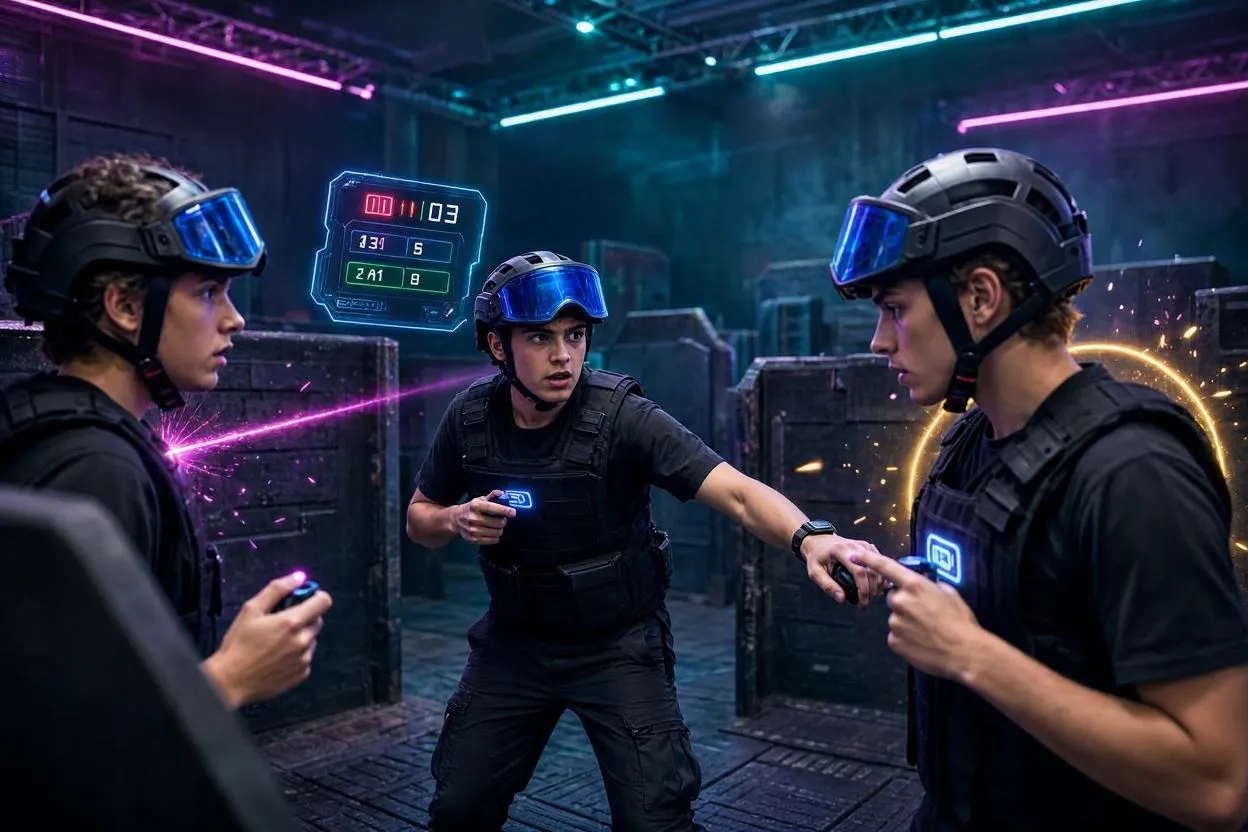
You’re in an arena. You answer questions to shoot opponents.
Correct answer = you shoot. Wrong answer = you’re vulnerable.
Speed matters. Accuracy matters more.
It’s the only Blooket mode where hesitation literally costs you the game.
The Split-Second Decision Making It Forces
Most quiz games let students think forever.
They overthink. They second-guess. They waste time on easy questions.
Laser Tag eliminates that luxury.
- Questions appear with a timer
- Answer fast or get shot by someone else
- Correct answers are rewarded immediately
- Wrong answers leave you exposed
I’ve watched over-thinkers become decisive. Not because I told them to.
Because the game punishes hesitation and rewards confidence.
Why This Game Mode Feels Different
Traditional review feels like work.
Laser Tag gameplay feels like actual competition.
The shooting mechanic adds stakes. The health bar adds tension.
Students aren’t just answering questions. They’re surviving.
One student told me: “I forgot we were learning. I just wanted to win.”
That’s when learning sticks. When they forget they’re learning.
When Laser Tag Demolishes Other Modes
Use it when:
- Students need fast recall practice
- Content is already familiar (not brand new)
- Energy is low and you need a boost
- You’re reviewing before assessments
- Students respond well to competitive pressure
Skip it when:
- Questions require deep thinking
- Students are already anxious about content
- You need collaboration instead of competition
- Material is complex or conceptual
I tried it for analyzing poetry once. Complete disaster.
Wrong tool. But for multiplication facts? Vocabulary? State capitals? Unbeatable.
My Battle-Tested Setup Strategy
Here’s how I run Laser Tag Blooket every single time:
- Load 15-20 questions maximum (intensity burns out fast)
- Use rapid-fire recall questions (no multi-step problems)
- Set game time to 8-10 minutes (shorter than other modes)
- Explain the health system first (30 seconds prevents confusion)
That last point matters. Students who don’t understand health bars panic.
Panicked students disengage. Two minutes of explanation saves 10 minutes of frustration.
The Health Bar System That Creates Tension
Here’s what makes this addictive:
Start with full health. Everyone’s equal at the beginning.
Correct answer = you shoot someone. Their health drops.
Wrong answer = you’re exposed. Others can shoot you.
Zero health = you’re out. Game over for you.
The tension builds naturally. No artificial drama needed.
I’ve seen quiet classrooms erupt into gasps when someone gets eliminated.
That’s an engagement you can’t fake.
What Actually Happens to Learning
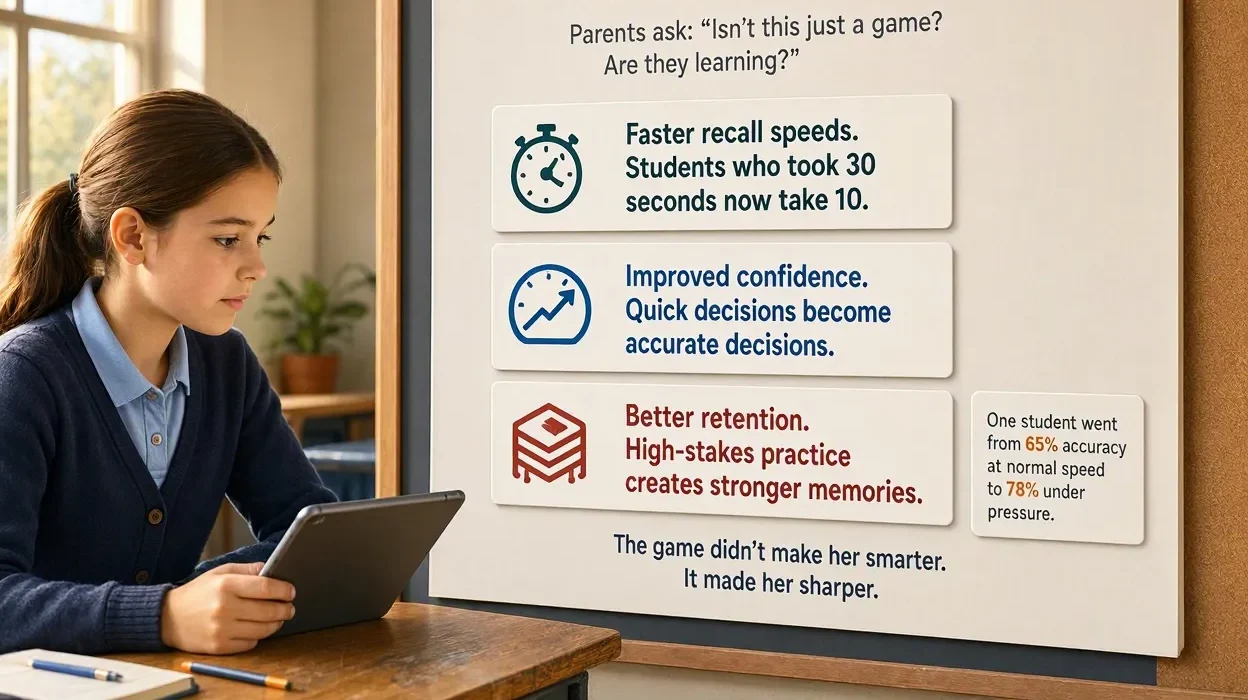
Parents ask: “Isn’t this just a game? Are they learning?”
Here’s what I see:
Faster recall speeds. Students who took 30 seconds now take 10.
Improved confidence. Quick decisions become accurate decisions.
Better retention. High-stakes practice creates stronger memories.
One student went from 65% accuracy at normal speed to 78% under pressure.
The game didn’t make her smarter. It made her sharper.
The Competitive Edge That Changes Behavior
Some students never try hard during review.
Put them in a Laser Tag? Different person.
Competition unlocks effort that encouragement can’t.
I’m not saying we should make everything competitive.
But for certain students and certain content? This game finds another gear.
Common Mistakes Teachers Make
Mistake #1: Using it for new content.
Students need baseline knowledge. This isn’t for first exposure.
Mistake #2: Running it too long.
High intensity can’t last 20 minutes. Keep it short.
Mistake #3: Not preparing students for the pressure.
Some kids freeze under time pressure. Warn them it’s fast-paced.
Mistake #4: Using complex questions.
Save the analysis for other modes. This is recall territory.
Quick FAQ: Laser Tag Mode
What happens when you get eliminated?
You’re out of that round. Game continues without you.
Can eliminated students rejoin?
No. Once you’re out, you’re out. Raises the stakes.
Is this too stressful for anxious students?
Can be. Know your students. Offer alternatives if needed.
How many questions should I include?
15-20 max. Quality over quantity in this mode.
The Reality Check Nobody Mentions
Not every student will love this.
Some kids hate time pressure. Some shut down under competition.
That’s okay. One game mode doesn’t need to work for everyone.
I use Laser Tag for 60% of my class. The other 40% get different review options.
Differentiation isn’t weakness. It’s smart teaching.
Why Speed Practice Actually Matters
Real-world knowledge often needs quick access.
Job interviews. Presentations. Conversations. Tests.
Laser Tag trains the brain to retrieve information faster.
It’s not about being frantic. It’s about being efficient.
Students who practice quick recall perform better under pressure everywhere.
What This Game Really Teaches
Beyond the content, students learn:
Decision-making under pressure (answer now or wait?)
Risk management (guess or skip?)
Confidence in their knowledge (trust first instinct)
Grace in losing (sometimes you get eliminated—and that’s fine)
These skills transfer. Way beyond Blooket. Way beyond school.
The Truth About Laser Tag
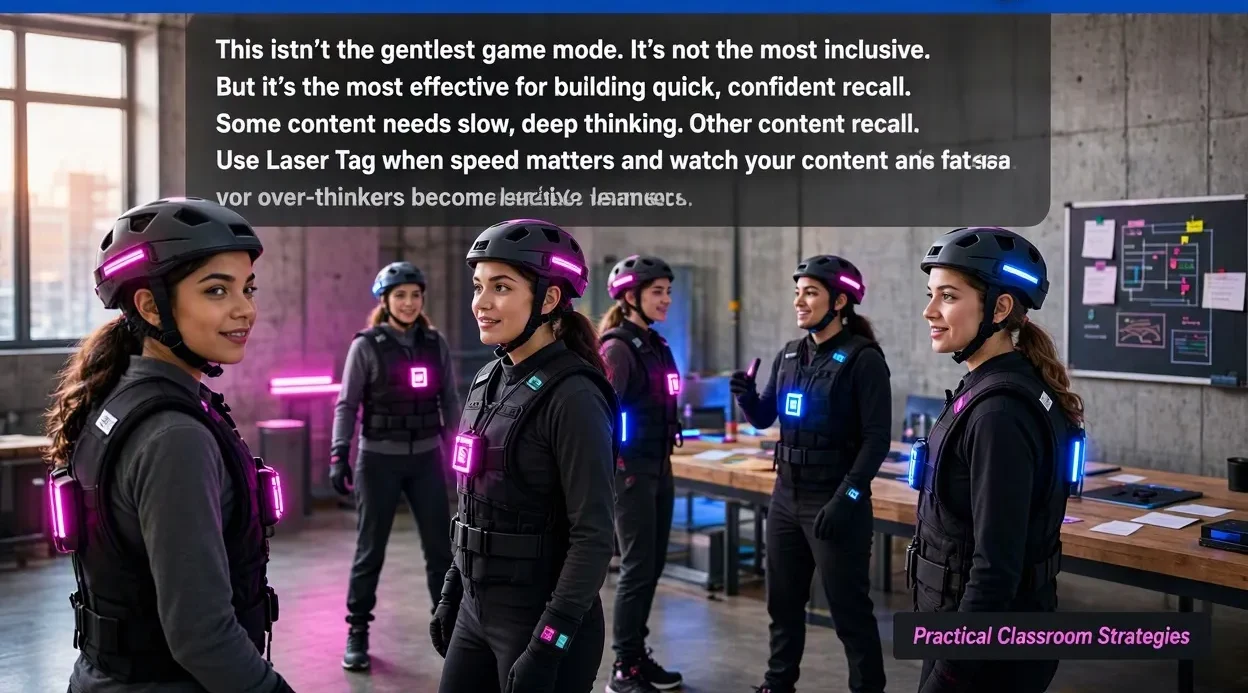
This isn’t the gentlest game mode. It’s not the most inclusive.
But it’s the most effective for building quick, confident recall.
Some content needs slow, deep thinking. Other content needs fast access.
Use Laser Tag when speed matters and watch your over-thinkers become decisive learners.