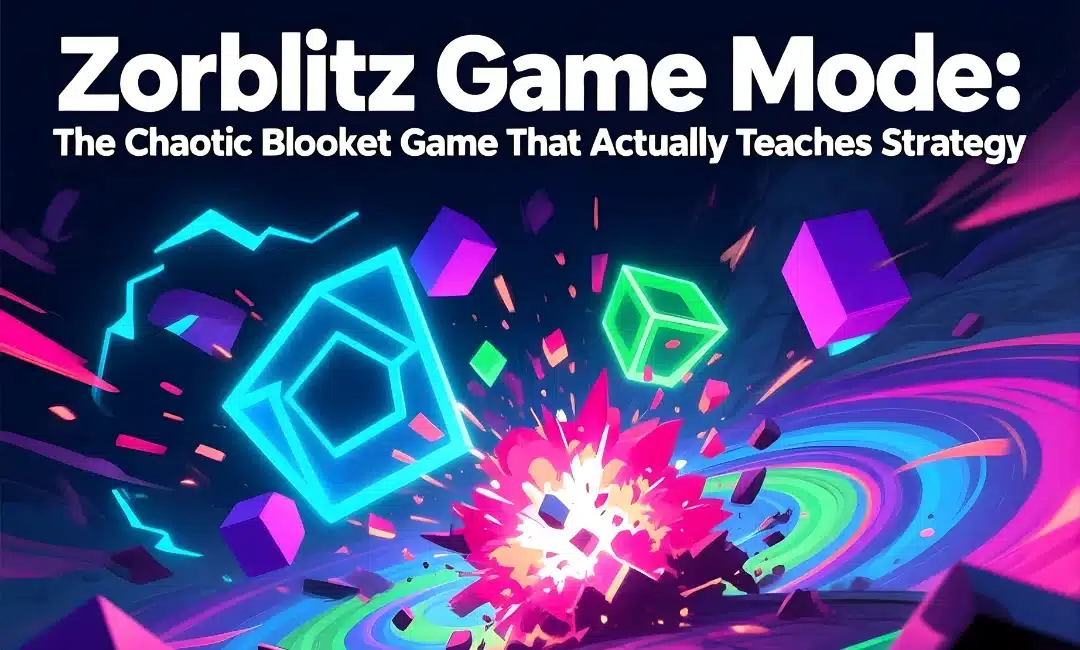
I thought Zorblitz was going to be a disaster. Random power-ups. Wild point swings. Total chaos.
Then I realized the chaos was the whole point. And it’s brilliant Blooket strategy.
What Zorblitz Really Is
You’re answering questions. Building your score. Sounds normal.
Then boom—power-ups drop. Cards flip. Everything changes in 3 seconds.
This isn’t a quiz game. It’s organized chaos that teaches adaptability.
Students can’t just memorize a strategy and coast.
They have to think. Adjust. Respond to constantly changing conditions.
The Power-Up System That Changes Everything
Here’s what makes Zorblitz gameplay different:
- Swap cards let you steal points from opponents
- Defense shields protect your score from attacks
- Multipliers can double or triple your earnings
- Randomizers shuffle everyone’s positions
Every answer gives you a card. Every card changes the game.
I watched a student in last place use three cards strategically and jump to first in 90 seconds.
That’s not luck. That’s teaching decision-making under pressure.
Why Controlled Chaos Beats Predictable Games
Most educational games are linear. Do X, get Y. Repeat.
Students figure out the pattern and go on autopilot.
Zorblitz breaks that pattern every 30 seconds.
You can’t coast. You can’t zone out.
One wrong card play and you’re back to square one. One smart move and you’re winning.
I’ve used this with students who “don’t like learning games.”
They love Zorblitz because it feels like actual competition, not dressed-up homework.
When to Unleash Zorblitz on Your Class
Perfect for:
- Review sessions before tests
- Friday afternoon energy management
- Students who get bored with predictable games
- Teaching risk assessment and decision-making
- Classes that thrive on competition
Avoid it when:
- Students are already overstimulated
- You need calm, focused practice
- Anxiety runs high in your classroom
- Content is brand new (too much cognitive load)
I made the mistake of running this on Halloween once.
Kids were already hyped. Zorblitz sent them into orbit. Learn from my pain.
My Proven Setup for Maximum Engagement
Here’s how I run Zorblitz Blooket every time:
- Use 15-20 questions (more gets exhausting)
- Set timer to 10-12 minutes (intensity can’t last longer)
- Explain card strategy beforehand (2 minutes of teaching saves 10 of confusion)
- Remind them it’s controlled chaos (sets expectations)
That third point is critical. Students who understand card strategy engage 10x more.
The ones who don’t? They just spam cards randomly and get frustrated.
The Card Strategy Nobody Teaches
Most kids use power-ups immediately. That’s a mistake.
Strategic players save defensive cards for when they’re winning.
They use swap cards when the point gap is large.
They hold multipliers until they’re about to answer a hard question correctly.
I don’t tell students this upfront. I let them discover it.
By game 3 or 4, the smart ones figure it out. That’s learning that sticks.
What Students Say About the Madness
“This game is insane and I love it.”
That’s a direct quote from a student who usually hates group activities.
Another one said: “I was winning, then I wasn’t, then I was again. I couldn’t stop playing.”
That’s variable reward schedules. That’s the psychology of engagement.
Predictable games get boring. Unpredictable games stay interesting.
Common Teacher Mistakes with Zorblitz
Mistake #1: Not explaining the cards before starting.
Confusion kills engagement. Spend 2 minutes teaching card functions.
Mistake #2: Running it too long.
This game is a sprint, not a marathon. 15 minutes max.
Mistake #3: Using it for low-energy classes.
You need baseline energy for this to work. Don’t try it at 7:30 AM Monday.
Mistake #4: Getting upset when it gets loud.
Zorblitz is inherently exciting. Accept the noise or pick a different game.
Quick FAQ: Zorblitz Mode
How many cards do students get?
One card per correct answer. More correct = more options.
Can they use multiple cards at once?
Yes. That’s where strategy gets interesting.
What if someone gets unlucky with cards?
It happens. That’s part of the game. Luck + skill = engagement.
Is this actually teaching anything?
Yes. Strategic thinking, adaptability, and risk management under pressure.
The Hidden Learning Behind the Chaos
Parents see Zorblitz and think it’s just a game.
But watch closely. Students are learning:
Decision-making (which card to use when)
Resource management (saving cards vs. using them)
Risk assessment (attack now or defend later?)
Adaptation (plans change every 10 seconds)
These aren’t content skills. They’re life skills.
And they’re learning them while reviewing state capitals or vocabulary words.
The Real Reason This Game Works
Most educational games try to hide the learning.
Zorblitz doesn’t bother. It just makes the competition so engaging that learning happens accidentally.
Students are so focused on winning they forget they’re answering 20 questions correctly.
That’s the dream. That’s what we’re chasing.
Use Zorblitz when your class needs a shot of adrenaline mixed with actual learning. Just bring earplugs.